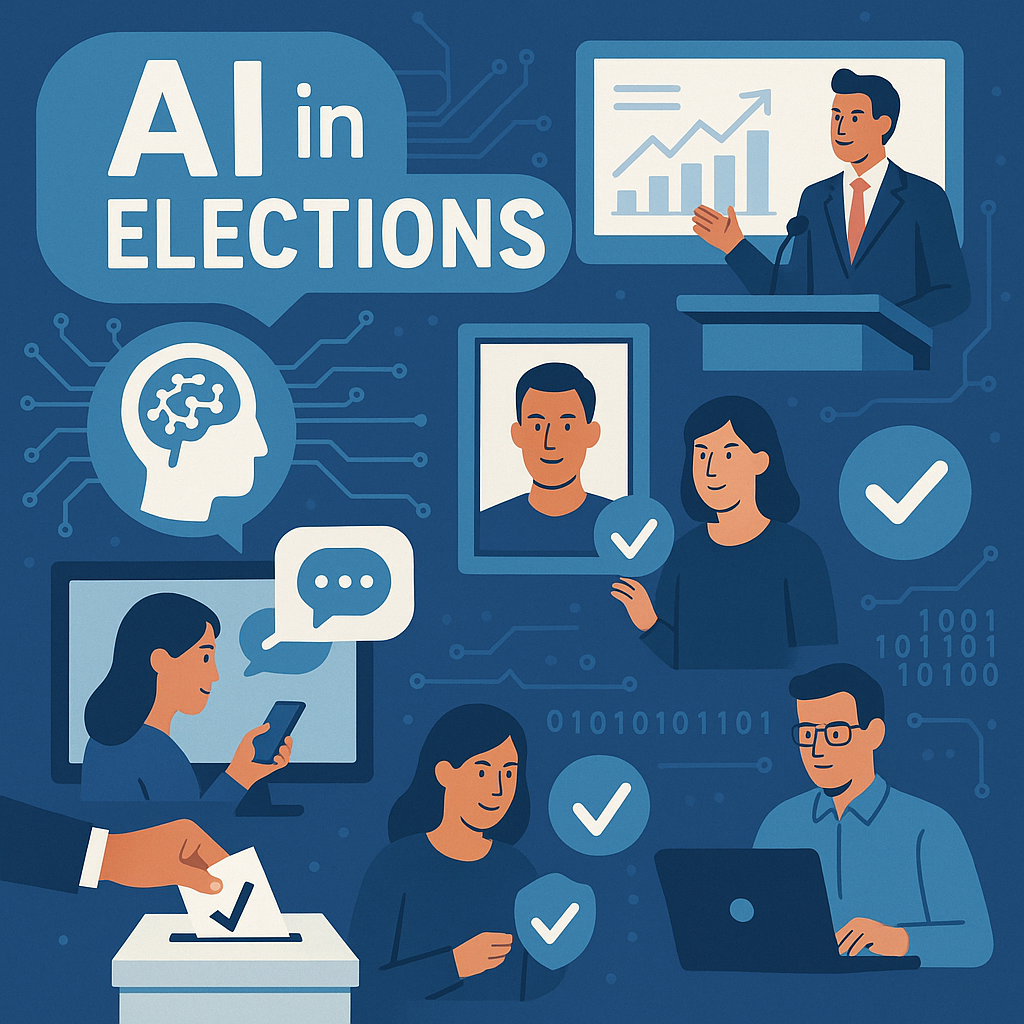
The New Era of AI in Elections: Innovation and Integrity
Artificial Intelligence (AI) is reshaping how elections are managed, communicated, and safeguarded around the world. What was once a purely manual process—voter registration, ballot counting, and campaign communication—is now becoming faster, smarter, and more transparent through AI-driven innovation.
One of the most significant advancements is AI-powered voter management systems, which help election commissions verify voter identities, prevent duplicate registrations, and ensure accurate electoral rolls. Machine learning models can quickly detect irregularities or potential fraud, improving the credibility and efficiency of the voting process.
Another innovation lies in data analysis and public engagement. AI tools can analyze large volumes of public feedback, social media sentiment, and polling data to help electoral bodies understand public concerns and tailor civic education campaigns more effectively. For example, chatbots trained on election laws can provide citizens with instant, 24/7 access to accurate information about registration, voting locations, or candidate details.
In addition, AI in cybersecurity plays a growing role in protecting election systems from digital threats. Advanced algorithms can detect and block hacking attempts, fake news, or misinformation campaigns in real time, preserving the integrity of democratic processes.
Finally, new research is exploring AI-assisted electronic and biometric voting, where facial recognition and secure blockchain technology work together to make digital voting both safe and accessible—especially for people with disabilities or those living abroad.
In short, the use of AI in elections marks a revolutionary step toward smarter, more transparent, and inclusive democracy—where technology empowers citizens and strengthens trust in the electoral process.