
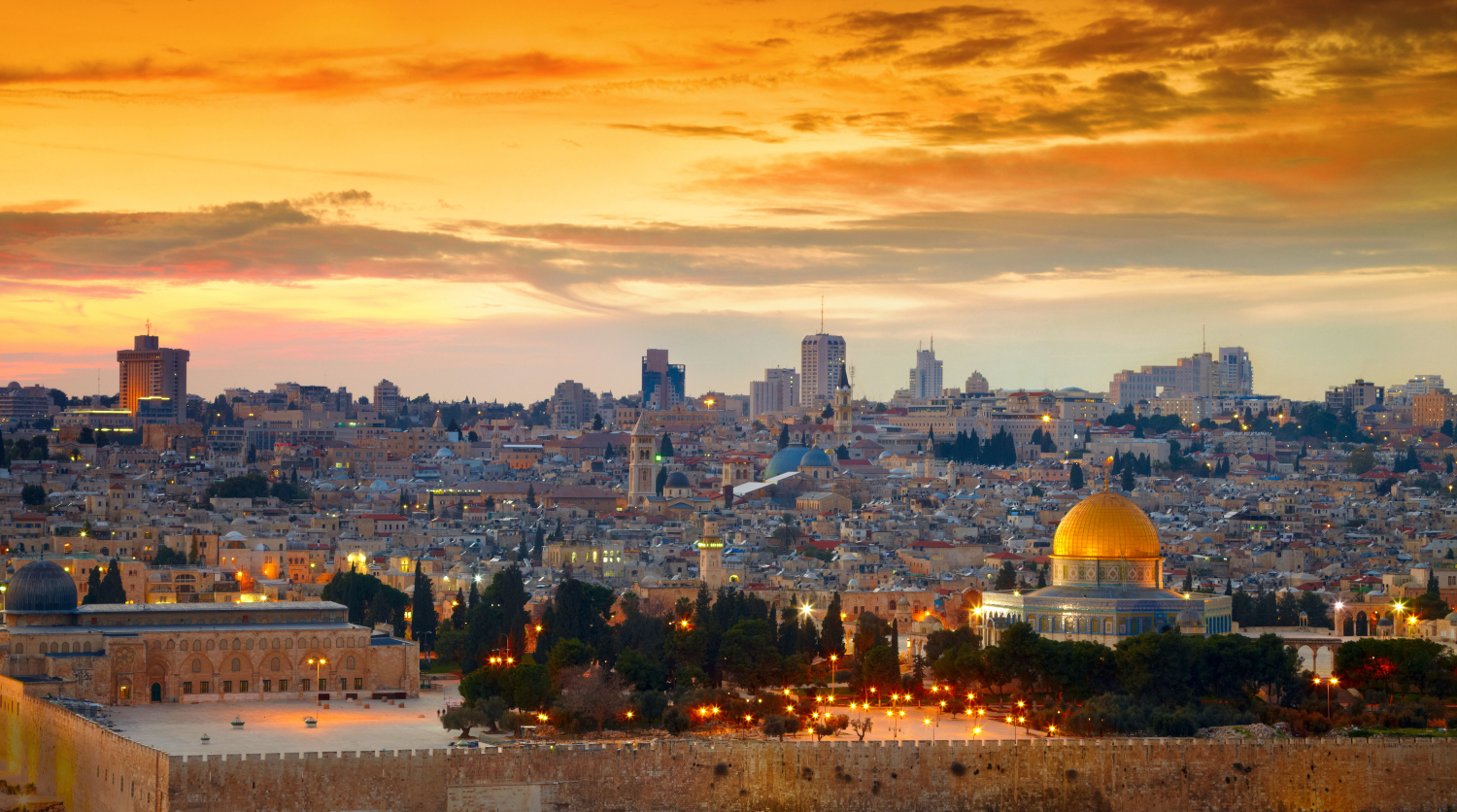
Jerusalem, the Holy City, stands as a powerful symbol of faith and history for Jews, Christians, and Muslims. Its ancient stones whisper tales of prophets, kings, and empires, drawing pilgrims and visitors from every corner of the world.
The heart of Jerusalem is the Old City, a UNESCO World Heritage site enclosed by Ottoman-era walls. Within its boundaries lie four distinct quarters: Jewish, Christian, Muslim, and Armenian, each with its unique character and sacred sites. The Western Wall, a remnant of the Second Temple, is the holiest site in Judaism, a place of fervent prayer and reflection. The Church of the Holy Sepulchre in the Christian Quarter marks the believed site of Jesus’ crucifixion and resurrection, a beacon for Christian pilgrims. The Muslim Quarter encompasses the Haram al-Sharif, home to the Dome of the Rock and the Al-Aqsa Mosque, the third holiest site in Islam. The Armenian Quarter, though small, holds a rich cultural heritage.
Beyond the Old City walls, modern Jerusalem pulses with life, a blend of ancient traditions and contemporary dynamism. Bustling markets offer a sensory feast, while modern neighborhoods showcase innovation. The Israel Museum houses invaluable historical artifacts, including the Dead Sea Scrolls. Yad Vashem serves as a solemn memorial to the Holocaust.
However, Jerusalem’s profound religious significance also makes it a center of political and religious complexities. Its contested status continues to be a sensitive issue. Despite these challenges, the spirit of Jerusalem endures, reflecting the deep connections of its diverse communities. It is a city where history is palpable, where faith resonates, and where the past profoundly shapes the present. A visit to Jerusalem is an immersion into the enduring story of humanity and its spiritual quests.
“There is no journeying to any mosque except for three: al-Masjid al-Haram (in Mecca), this mosque of mine (in Medina), and al-Masjid al-Aqsa (in Jerusalem).” – Prophet Muhammad (peace be upon him)